
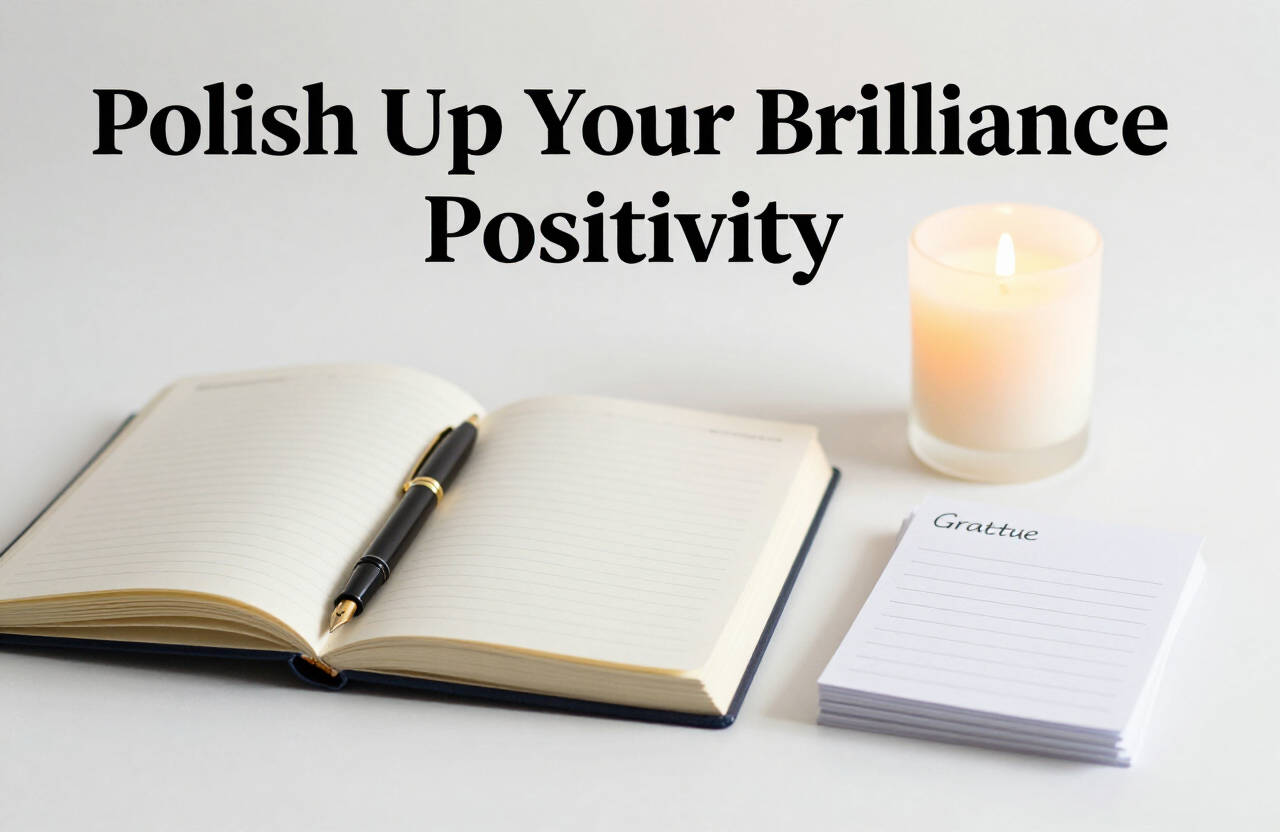
Keeping your brilliance sharp takes daily positivity routines—much like brushing your teeth. You wouldn’t skip that. Don’t skip the practices that keep the shine on your brilliance either. Here are three of the most useful tools.
- Meditate and pray. Spend time each day in meditation and prayer. Several brain-imaging studies have found that regular meditation is associated with more gray matter in regions tied to attention, self-awareness, and emotion. The evidence for prayer alone changing gray matter is thinner, but many people use prayer the same way they use meditation: to settle the mind and return to what matters. Researchers at the HeartMath Institute have also shown that feelings such as love, gratitude, and appreciation are linked to more coherent heart-rhythm patterns. They report that the heart produces the body’s strongest electromagnetic field and that this field can be measured a few feet from the body. That work is useful for understanding personal calm and resilience. Claims that your emotional state directly changes the health of everyone nearby are still debated, so treat them as an invitation to practice—not as settled science.
- Practice gratitude. Thank people genuinely: customers, colleagues, vendors, family, and—if it is part of your life—your connection to a higher power. One of the simplest positivity rituals is a daily gratitude list. In Make Miracles in Forty Days, Melody Beattie recommends writing what you feel and, when you can, sharing the list with a trusted partner. She urges you to do this even on days you do not feel grateful, including the hard experiences that shaped those feelings.
- Journal. Journaling helps capture ideas and sort thoughts and feelings. Psychologist James Pennebaker’s research on expressive writing is often cited here. In a 1988 study, people who wrote about stressful experiences showed a stronger T-lymphocyte response than those who wrote about ordinary topics. A later trial published in JAMA in 1999 found some symptom improvement among people with asthma or rheumatoid arthritis who wrote about stressful events. Results in later studies have been mixed, and journaling is not a treatment on its own. Still, many people find that putting stress into words helps them make sense of it. Popular summaries, including Maud Purcell’s piece on Psych Central, make the same practical point: writing can clear mental clutter so you can better understand yourself and the people around you. If you are new to journaling, start small. Write three things that went well that day and why they made the list, or use the gratitude list from step two.
In 15 years of coaching leaders, I have seen the same reaction again and again. People balk at meditation, gratitude, and journaling. They roll their eyes. They doubt these habits will change anything. In conversations about gratitude, “thank you” sometimes comes with a catch: it is offered only if the other person is judged worthy. That raises a useful question: is your gratitude practice deep, or is it thin and conditional? Feeling grateful at an emotional level is more than the cliché “I am grateful for my home and the food on my plate.”
Take these practices seriously if you want a real shift in how you show up. Pick one and stay with it for eight weeks. Then assess your mental well-being and ask honestly whether your attitude has changed. I would like to hear how it goes. Drop me a note with the results—or call if you want encouragement along the way.