
I thought fitting daily exercise into my day would become super easy when I started my speaking and coaching business. I no longer would have to rise at 4:30 a.m. to work out. I could just take a break and exercise whenever I felt like it. WRONG. I always wanted to work out but told myself it would be a reward when I checked off the next task on my to-do list. The day would progress, and at some point late in the day I promised myself that I would get a workout in tomorrow, as now I was just too tired. When on the road, I took tennis shoes only to have them add to the weight in my suitcase, not to provide any kind of serious workout. Literally, years went by without much, if any, exercise. I was not even close to satisfying the recommended 150 minutes of moderate or 75 minutes of vigorous exercise each week. Nor was I strength training two times a week. (U.S. Department of Health and Human Services.)
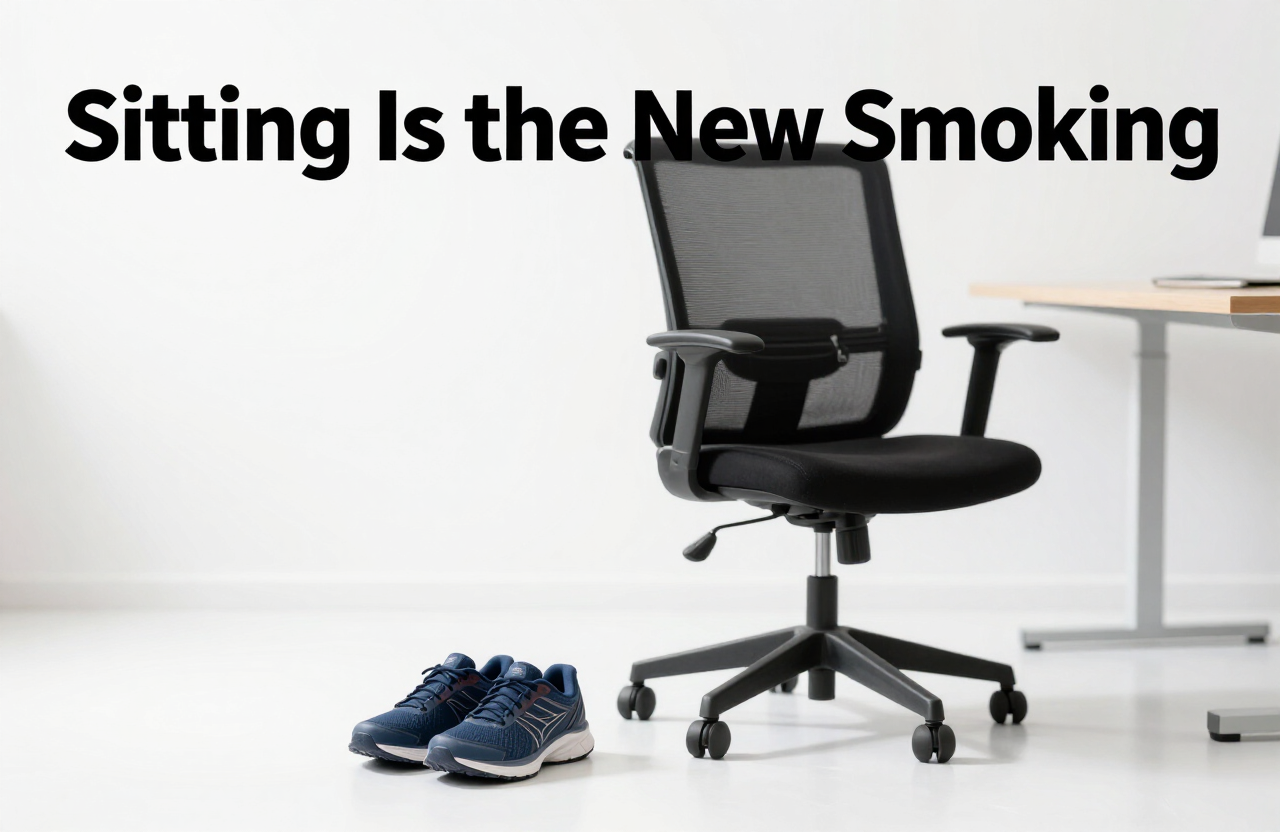
Turns out I am not alone. Two-thirds of American adults do not get enough physical activity, according to the U.S. Department of Health and Human Services as reported in Forbes. Looking at the risks and benefits of daily exercise can be a motivator to get you moving. Dr. James Levine of Mayo Clinic, in a 2014 interview with the Los Angeles Times, popularized the line “Sitting is the new smoking.” He went further: “Sitting is more dangerous than smoking, kills more people than HIV, and is more treacherous than parachuting. We are sitting ourselves to death. The chair is out to kill us.” Hyperbolic as that may sound—and many researchers say it overstates the comparison—the core warning still holds. Too much sitting is linked to poorer health, and most of us sit far more than we think.
If that isn’t enough to get you moving, a look at the benefits might help spur you to action. The following list of health paybacks from exercise comes from Building Your Brilliance: Move from Stressful Survival to Joyful Living:
- Weight control
- Reduction in type 2 diabetes, some cancers, risk of dementia, and depression
- Improved mood, bone density, heart health, and overall physical function
- Ability to do daily activities
- A longer life
What’s Your Wake-Up Call?
We often need a personal wake-up call to get us off our chair and moving. My call was delivered on vacation. It was similar to how seeing yourself in a picture motivates you to lose some weight or get a haircut. My husband and I hired a cold-water surf coach. We love the water and thought, how hard can this be? Well, needless to say, it was very hard, and it became quite obvious that I was in horrible shape. The instructor finally ordered me to sit on the beach and watch, as I was too tired to be safe in the water any longer. Low blow for me. Also a huge motivator.
I came home and promptly joined a Masters Swim club. It’s been 10 years, and I haven’t stopped swimming and working out since. And I feel better for it. A workout program plus general moving throughout the day is key to your brilliance. A couple of weeks ago I visited two different clients on-site. In one office I saw treadmill desks and a workout facility. In the other, only sitting desks with employees glued to the computer. Lunch break meant walking 10 feet away and sitting at another table. That’s it when it came to movement in the workday.
Experts suggest that the more frequently you alternate between sitting and standing, the more benefit you get. Alternating every 20 minutes, for example, has much more benefit than standing for 4 hours then sitting for 4 hours, even though both are a 50:50 ratio. According to Forbes, “Some research suggests that exercising during working hours can also pump up work performance. A Leeds Metropolitan University study found that workers who visited the gym during working hours were more productive, managed their time better, and felt more work satisfaction.” Other benefits include enhanced creativity, quicker learning, sharper memory, and improved concentration.
What can you do to start exercising per the recommended guidelines and getting up and moving during your workday if the bulk of your responsibilities require seat time? Depending on your current health conditions, consider the following:
- Park at the far end of the parking lot
- Use the stairs
- Use your iPhone or Fitbit stand reminders—and actually stand when you’re prompted
- Set a timer for every 50 to 60 minutes and use it to remind you to move
- Try walk-and-talk meetings or stand-and-chat meetings
- Meet a friend for a walk versus lunch
My friends, brilliance in life and at work means moving. Don’t wait for a wake-up call. Go to the doctor, get yourself checked out, and start moving on your road to brilliance.