
Solving the “Do More with Less” Dilemma
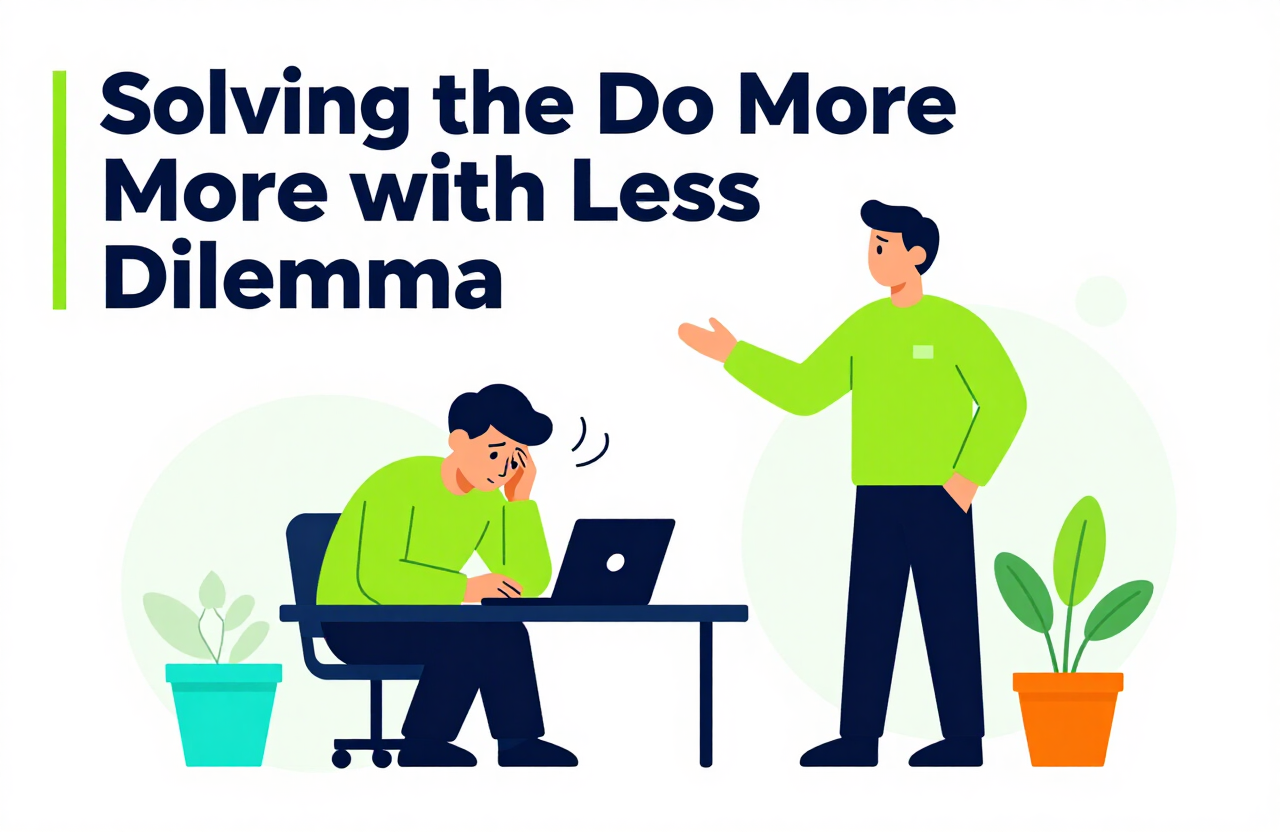
Have you been asked to do more with less? Are you resenting the load and watching your stress rise? Or, as a leader, are you frustrated that the team will not go the extra mile?
Workplace stress is the issue I am asked to address most often. That is not surprising. A mid-2010s Regus survey of about 22,000 professionals in more than 100 countries found that 53 percent felt more burned out than they had five years earlier. “Do more with less” was already a familiar line at work.
Stress is the strain you feel when a demand—real or perceived—feels bigger than the resources you have to meet it. That is Lazarus and Folkman’s point: stress is not the event itself. It is the gap between “what this seems to require” and “what I believe I can handle.” When resources run low, at home or at work, we feel it.
But “do more with less” may not mainly mean fewer people or fewer supplies. There may be a thinner resource underneath: information, priorities, and direction.
Wrike’s 2015 workplace-stress survey asked people what drove their stress at work. The top answers were:
- Missing information (52 percent rated this high or very high)
- Trouble prioritizing tasks (51 percent)
- Unrealistic project goals (49 percent)
- Deadlines that keep moving (47 percent)
Unclear leadership belongs in the same family. The problem is often not a vague complaint about “too much work.” It is leaders who do not give a clear vision—and team members who do not press for the answers they need.
What can you do so people do not burn out?
- Say the vision more than once. Share it with enough feeling that people can connect to it. One announcement is not enough. If you are on the team and you cannot state the vision, ask.
- Listen on purpose. Tell people why you hired them and what the job is for. Ask what they need in order to do it well. Learn the backstory and what actually matters to them. Listening once is not listening. If you need clarity, ask for it—and listen in return.
- Set norms that make it safe to speak. People should be able to ask the questions the work requires and, at times, challenge a decision. That puts more than one brain on the problem. If you are a team member, help keep that climate healthy.
The next time “do more with less” lands on your desk, ask what you actually need—and whom you need to talk with and listen to—so the result is worth the effort.