
Spending time in nature is one of my life’s greatest pleasures. Luckily, the outdoors also offers three real gifts for the mind and for how we work.
1. It can ease stress.
When you choose it, and you are dressed for it, time outside is a break from the day’s tasks. Movement also makes it harder for stress to hijack clear thinking.
Daniel Siegel and Tina Payne Bryson put it this way in The Whole-Brain Child: “Research has shown that bodily movement directly affects brain chemistry. So when one of your children has lost touch with his upstairs brain, a powerful way to help him regain balance is to have him move his body.” The book is written for parents. The chemistry is not only for kids. Adults get the same reset when they move.
2. It can loosen creative thinking.
A walk gives the brain room to work without the usual noise.
Nikola Tesla is a useful example, even if the source is a productivity e-book rather than a lab paper. He often worked from about 9 a.m. to 6 p.m.—and frequently later—and said he walked eight to ten miles a day. Walking, he wrote, was the most stimulating activity he knew. Treat that as habit and incubation, not a guarantee of “eureka.” Then ask how you might get moving in an ordinary week.
3. It gives you time to reflect.
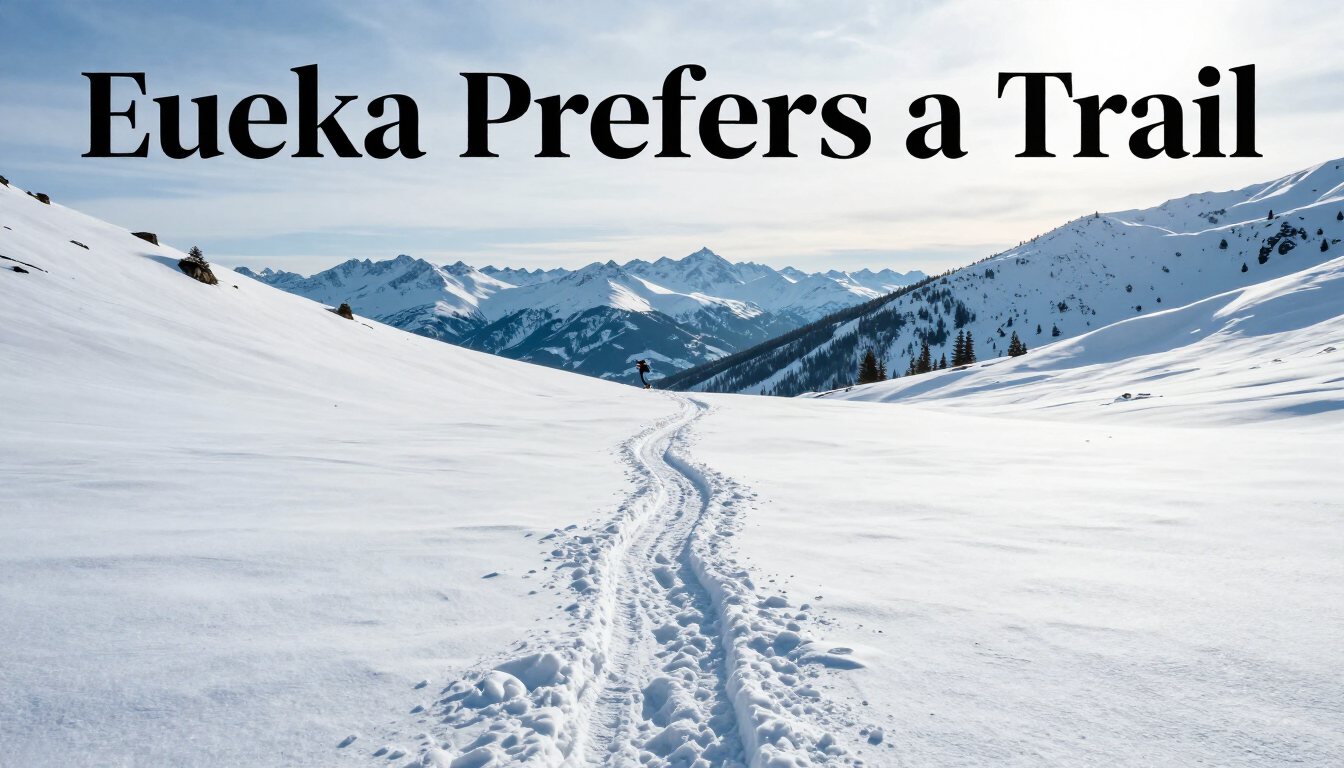
This past week I snowshoed in Big Sky, Montana. I love the cold, the snow, and the work of climbing toward a view. On the trail I kept glancing at the prize—the vista—and when I was winded I looked at the next few steps. When it got hard I counted 100 steps, then stopped to see how far I had come. I had to laugh. That is the approach I need for the book I have been threatening, promising, even bragging I will give the world: look up, then take the next hundred steps.
Reflection is how experience turns into something usable. One coach I follow, Izzy Justice, author of EPowerment, talks about a year full of moments we could learn from—and how few we actually sit with. I have not seen a study that pins that at “80 experiences, only three processed.” The useful part does not need a number: ask what worked, what did not, and what you will do next. Nature is a good place to ask.
Get outside. Ease the stress. Let an idea walk around. Look at the view, then at the next step. It is right outside the door. Take more than a few steps, and start.